
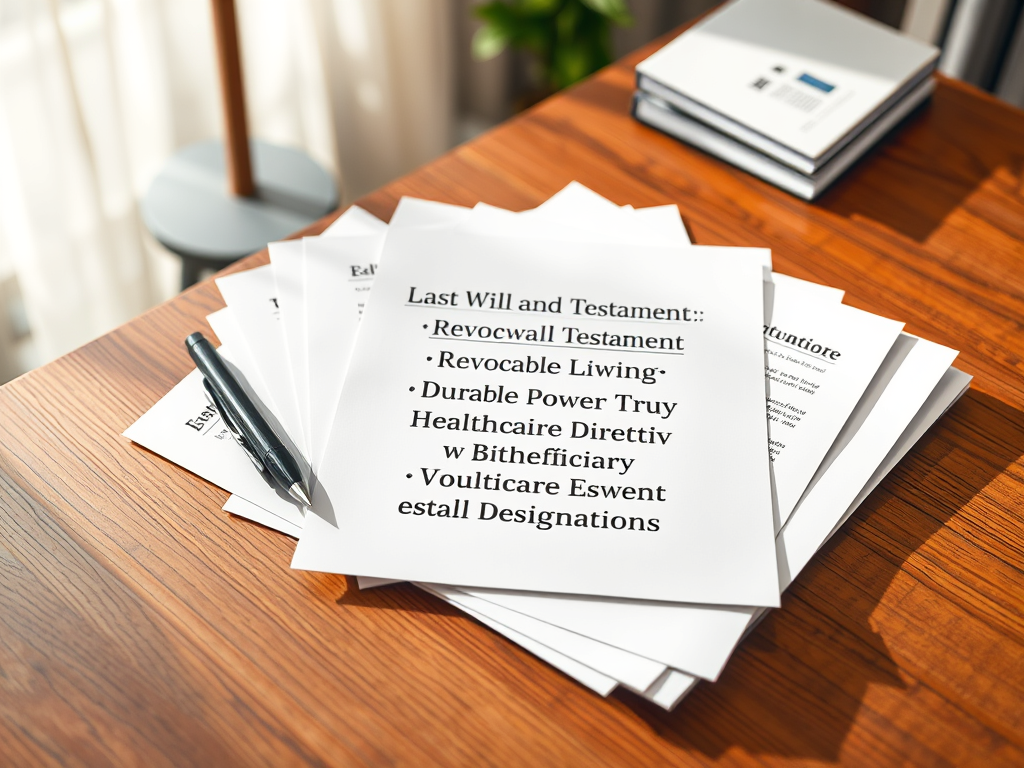
Estate planning isn’t just for the wealthy. If you have a bank account, a car, or children, you need an estate plan. Without one, the state decides who gets your assets, who raises your kids, and how your bills get paid — and their default choices are often not what you’d want.
Yet only 32% of American adults have a will. Here’s what you need and how to get it done without spending $5,000+ on a lawyer.
The 5 Essential Estate Documents
1. Last Will and Testament
The foundation. Specifies who gets what, who’s the executor (manages the process), and who’s the guardian for minor children. Without a will, state intestacy laws control distribution — and they don’t always match your wishes.
2. Revocable Living Trust (Optional but Powerful)
Assets placed in a trust skip probate (the costly, months-long court process). This saves your heirs time, money, and public exposure. Essential if you own property in multiple states or have a complex estate.
3. Durable Power of Attorney
Designates someone to make financial decisions if you’re incapacitated. Without it, your family may need a court-appointed guardian — an expensive and time-consuming process.
4. Healthcare Directive (Living Will)
Documents your medical treatment preferences if you can’t communicate. Do you want life-sustaining treatment? Under what conditions? This prevents agonizing decisions for your family during a crisis.
5. Beneficiary Designations
Your 401(k), IRA, life insurance, and bank accounts pass by beneficiary designation, not by your will. If your ex-spouse is still listed as beneficiary on your 401(k), they get the money — regardless of what your will says. Review these annually.
Estate Planning by Age/Stage
| Life Stage | Priority Actions |
|---|---|
| Single, no kids (20s) | Basic will, beneficiary designations, healthcare directive, POA |
| Married, no kids | Update will, add spouse to accounts, review beneficiaries |
| Parents with kids | Will with guardian designation, term life insurance, trust (if valuable assets) |
| High net worth ($1M+) | Revocable trust, irrevocable trust strategies, tax planning |
| Pre-retirement | Review all documents, Roth conversions, gifting strategies |
DIY vs. Lawyer: What to Choose
| Method | Cost | Best For |
|---|---|---|
| DIY (Trust & Will, FreeWill) | $0–$200 | Simple estates, single/married without complex assets |
| Online legal service (LegalZoom) | $200–$600 | Moderate complexity |
| Estate attorney | $1,500–$5,000+ | High net worth, blended families, business owners, real estate in multiple states |
Common Estate Planning Mistakes
- Not having a will at all: The state’s default plan rarely matches your wishes
- Outdated beneficiaries: Check after marriage, divorce, births, and deaths
- No incapacity planning: What happens if you’re alive but can’t make decisions?
- Ignoring digital assets: Crypto wallets, online accounts, email — document access details
- Not funding the trust: Creating a trust but never transferring assets into it
Frequently Asked Questions
Do I need a lawyer for a will?
For simple estates, no. DIY tools like Trust & Will create legally valid documents. But if you have complex assets, a business, or a blended family, an estate attorney is worth the cost.
How often should I update my estate plan?
Review every 3–5 years and after major life events: marriage, divorce, birth, death, significant asset changes, or relocation to another state.
🚀 Take Control of Your Finances with Richify
Estate planning starts with knowing what you have. Use Richify’s Portfolio View to see all your assets in one place — the foundation of any estate plan.
📱 Download the Richify app to track your complete financial picture and make informed estate planning decisions.
Disclaimer: This article is for educational purposes only and does not constitute legal advice. Consult an estate attorney for personalized guidance.



Leave a Reply